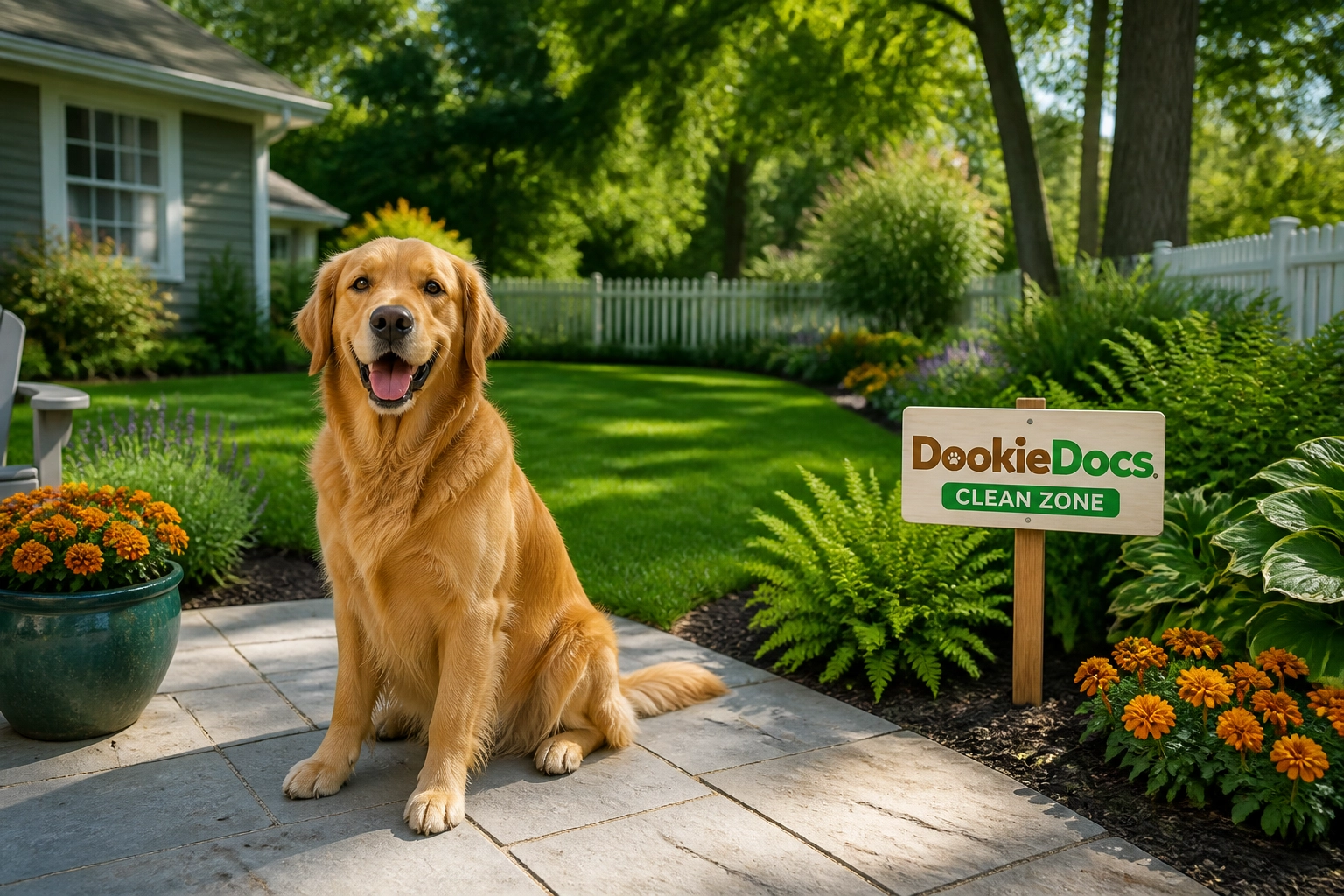
The Ultimate Guide to Dog-Friendly Landscaping
Your Perfect Yard. Stress-Free. Guaranteed.
You love your dog, but you probably don't love what they do to your yard. Between the yellow spots on the grass and the "landmines" waiting for your lawnmower, maintaining a beautiful landscape can feel like a losing battle. It doesn't have to be that way.
Creating a dog-friendly yard in the Capital Region requires a mix of smart design and consistent maintenance. You can have a lush, green sanctuary that both you and your pup enjoy. The secret is landscaping with your dog's natural habits in mind, not fighting against them.
At DookieDocs, we see thousands of yards every year. We know which setups work and which ones lead to a muddy, smelly mess. This guide breaks down exactly how to transition your outdoor space into a pet-friendly paradise that stays clean and safe all year long.
How do I set up a designated dog potty area in my yard?
If you let your dog go anywhere, they will go everywhere. The most effective way to keep your lawn green is to give your dog a specific place to do their business. This protects your main turf and makes cleanup significantly faster and more thorough.
Step 01: Pick the right spot. Choose a low-traffic corner of the yard that is easy to access but tucked away from your main patio or play area.
Step 02: Prep the ground. Clear the grass and lay down heavy-duty landscaping fabric. This prevents weeds from popping up while allowing liquid to drain through.
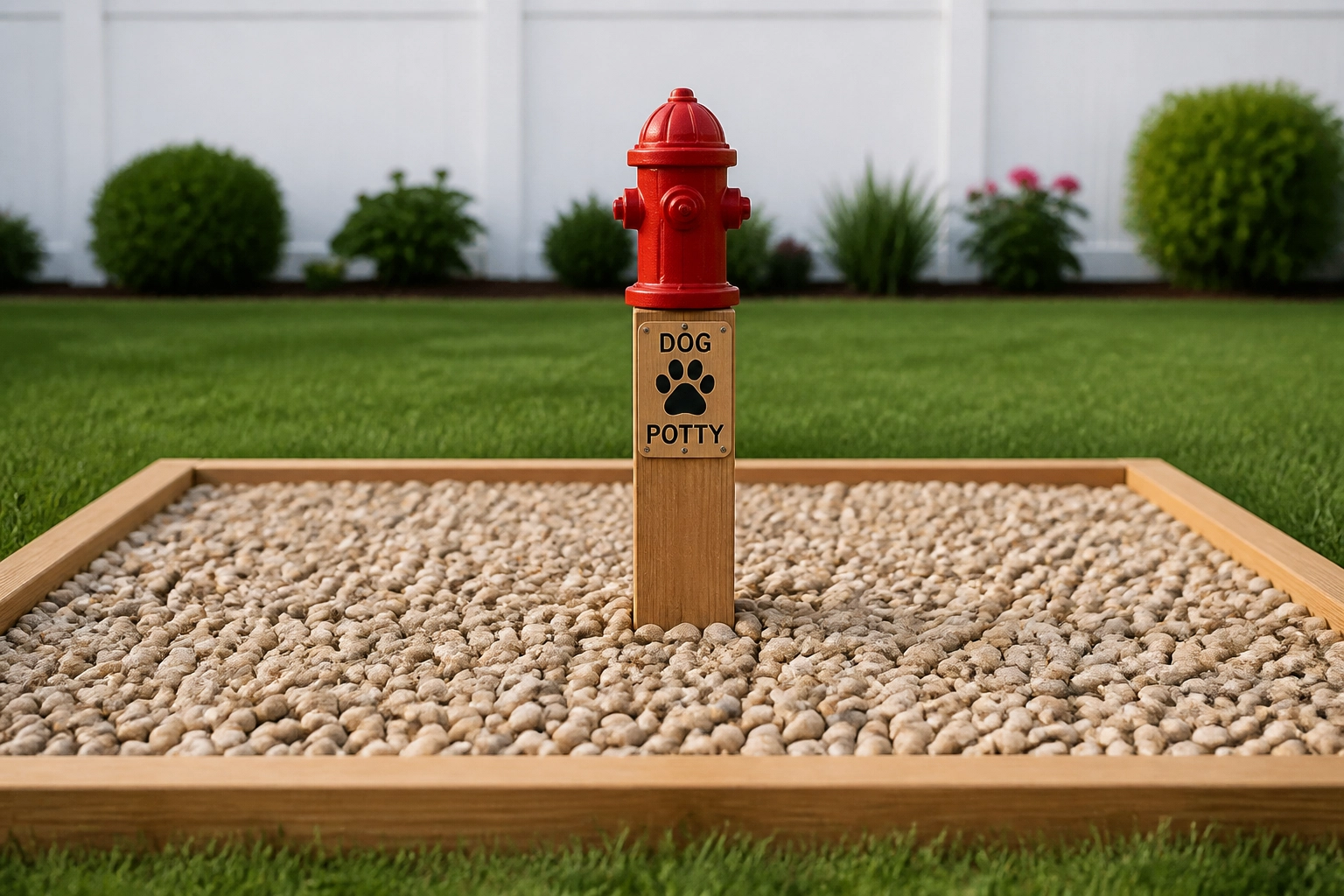
Step 03: Choose your surface. We recommend pea gravel. It is soft on paws, relatively inexpensive, and drains incredibly well. Most importantly, it doesn't trap odors like wood mulch does.
Step 04: Add a marking post. For male dogs, a small boulder, a vertical log, or even a decorative "fire hydrant" gives them a clear target. This keeps them from lifting their leg on your expensive shrubs.
Step 05: Consistent training. Guide your dog to this spot on a leash for the first few weeks. Reward them immediately when they use it.
Select Tough Ground Covers That Can Handle the Heat
Standard grass is fragile. Dog urine contains high levels of nitrogen, which effectively "burns" the grass, leaving those unsightly yellow or brown circles. If you aren't ready to give up on a green lawn, you need to choose varieties that can handle the nitrogen load and the physical wear and tear of paws.
- Clover: Micro-clover is a game-changer. It stays green, requires less water, and is significantly more resistant to dog urine than traditional fescue.
- Bermuda Grass: If your yard gets plenty of sun, Bermuda grass is a "self-repairing" option. Its aggressive growth pattern helps it fill in bare spots quickly.
- Kentucky Bluegrass: A local favorite in New York, it's durable but requires more maintenance to stay healthy under the stress of pet activity.
- Artificial Turf: For small side yards or high-traffic runs, high-quality synthetic turf is a permanent solution. Just ensure it has a perforated backing for drainage.
Regardless of the grass you choose, regular pet waste removal is the only way to prevent long-term soil contamination. Our weekly pet waste removal keeps the cycle of nitrogen burn and bacterial buildup from starting in the first place. When waste sits, it seeps into the root system and can kill even the toughest turf.
Build a Custom "Patrol Path" for Your Protector
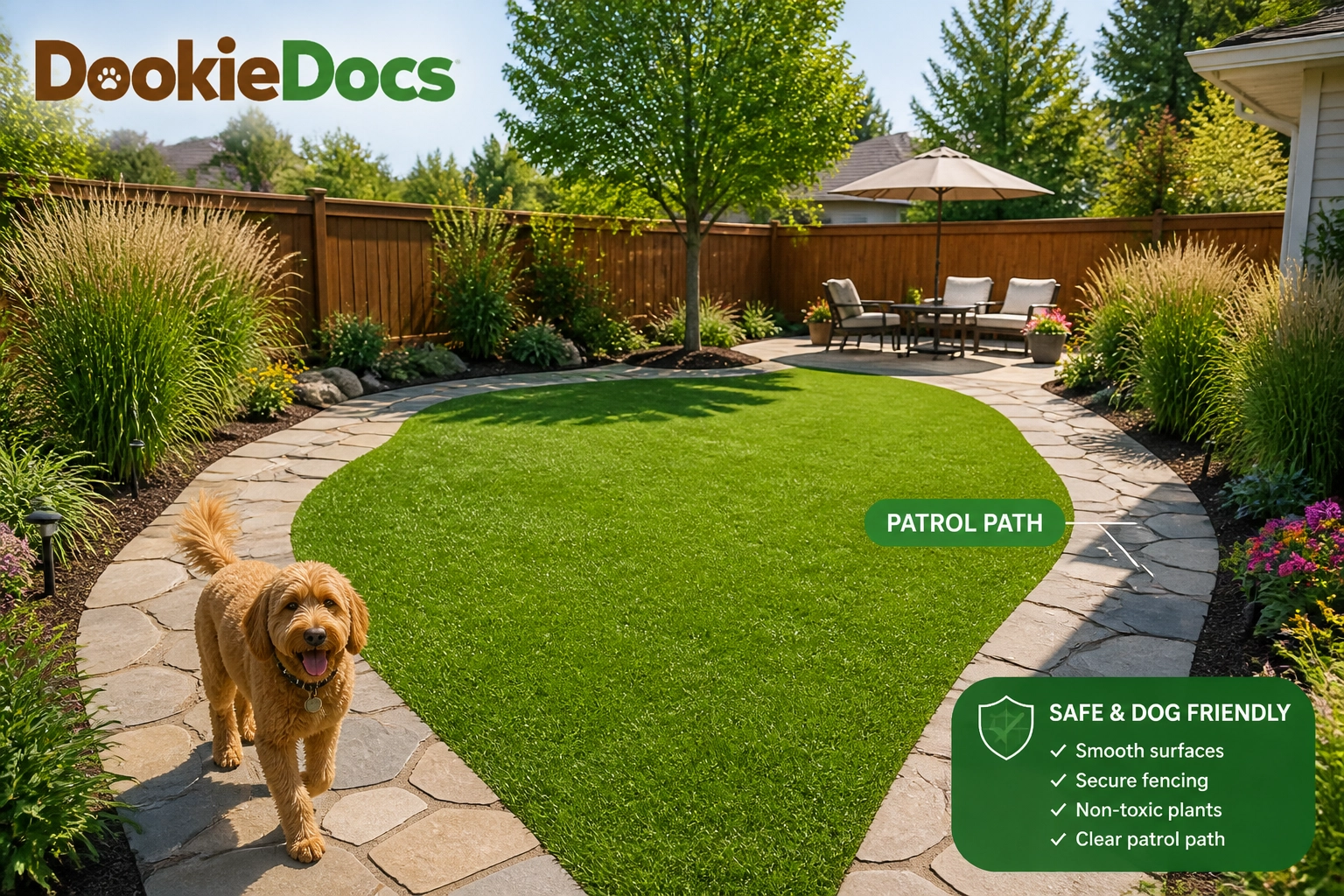
Dogs are territorial by nature. They love to patrol the perimeter of the yard or run back and forth along the fence line when the neighbor’s cat walks by. If you try to grow grass in these "high-traffic lanes," you will end up with a dirt trench.
Work with your dog’s instincts by installing a permanent path. A 12-to-18-inch border of smooth flagstone or decomposed granite along the fence line looks intentional and professional. It prevents the mud-pit look and gives your dog a stable, mud-free surface to run on.
Choose Safe and Resilient Plants for the Capital Region
Not all plants are created equal. Some are toxic to your pets, while others are simply too delicate to survive a game of fetch. When you're planning your garden beds, focus on hardy, non-toxic options that thrive in the New York climate.
Safe and Durable Choices:
- Sunflowers: Bright, cheery, and completely non-toxic.
- Marigolds: Great for adding color and they naturally repel certain pests.
- Ferns: Most varieties (like Boston or Sword ferns) are safe and love the shaded areas of your yard.
- Arborvitae: Excellent for privacy hedges and tough enough to handle a dog brushing against them.
Plants to Avoid (Toxic):
- Lilies: Highly dangerous if ingested.
- Azaleas: Can cause serious digestive and cardiac issues.
- Oleander: Extremely toxic to both pets and humans.
- Castor Bean: Contains ricin and is deadly in small amounts.
Always double-check a plant's safety on the ASPCA website before putting it in the ground. If you have existing plants that you want to protect, consider using raised planter boxes. This lifts the foliage out of the "danger zone" and prevents your dog from digging up the roots.
Your Yard Maintenance Checklist
A dog-friendly yard isn't a "set it and forget it" project. It requires a routine to stay clean and smelling fresh. Follow this simple checklist to keep your outdoor space in top shape:
- [ ] Daily: Check for and remove solid waste to prevent parasite spread.
- [ ] Weekly: Rinse down "pee spots" or your designated potty area with a garden hose to dilute nitrogen.
- [ ] Monthly: Check your fence line for any signs of digging or loose boards.
- [ ] Seasonally: Apply a pet-safe deodorizer to neutralize lingering smells.
- [ ] Year-Round: Schedule professional scooping to ensure nothing is missed.
Frequently Asked Questions
Does dog poop work as fertilizer? No. This is a common myth. Unlike cow manure, dog waste is high in protein and highly acidic. It will burn your grass and can carry harmful parasites like hookworms and roundworms that can live in your soil for years.
How often should I have my yard scooped? For most families with one or two dogs, a weekly service is the sweet spot. It keeps the waste from accumulating and prevents it from being stepped on and tracked into your house.
Is your deodorizer safe for my pets? Yes. We use pet-safe, biodegradable treatments that neutralize odors at the source rather than just masking them with heavy perfumes. Your yard will smell fresh, and your dog will be safe to go right back out and play.
What happens if it rains? We work through most weather conditions. If it is safe for us to be out, we will be there. If extreme weather prevents a visit, we will notify you immediately and make it up as soon as the weather clears.