The Great Spring Thaw: Managing Winter's Leftovers
The Great Reveal Nobody Asked For
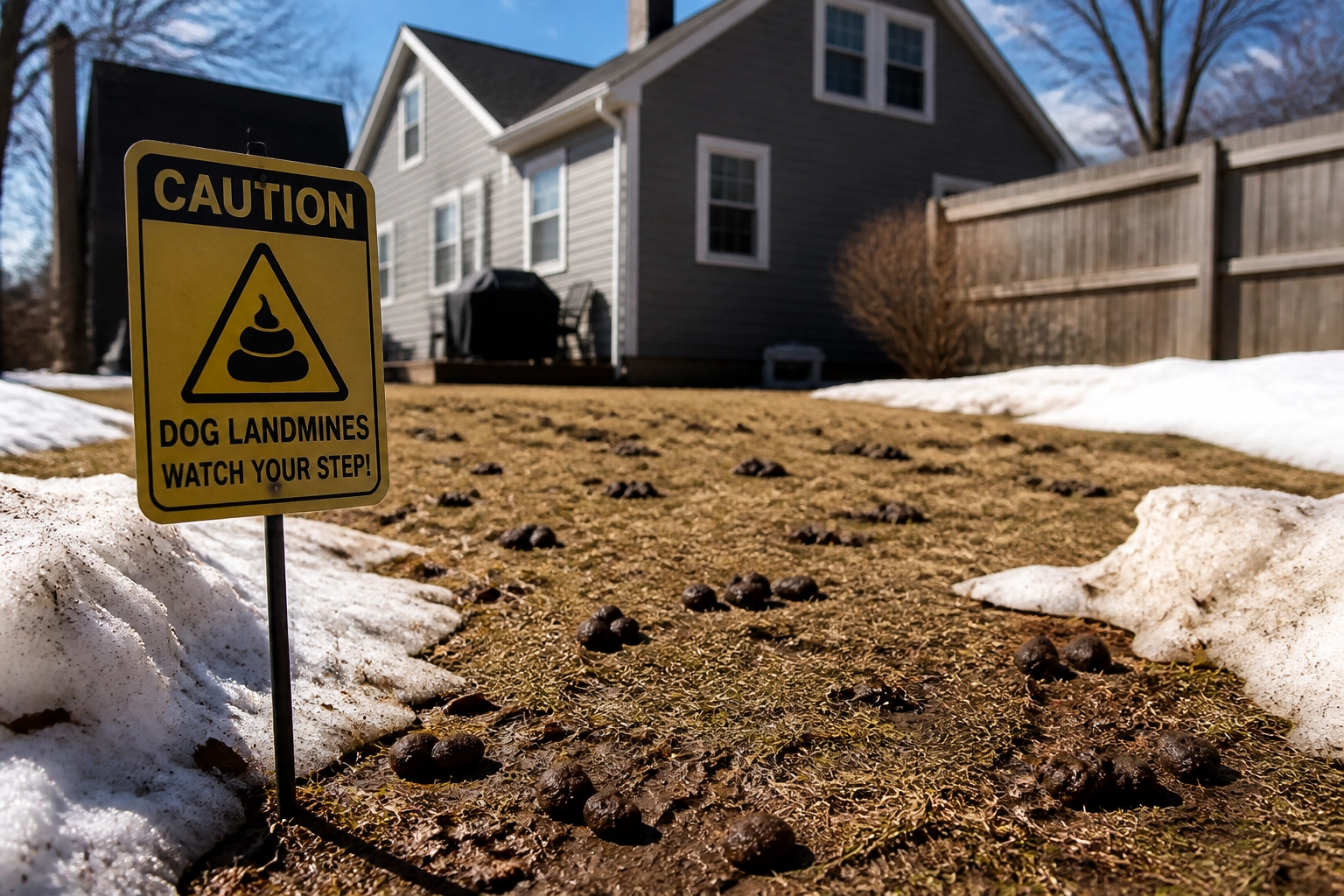
Spring in the Capital Region is a beautiful thing. The birds start chirping, the sun finally peaks out from behind that permanent gray cloud, and the snow finally begins its slow retreat. But as that white blanket disappears, it reveals a secret you’ve been ignoring since December: the "Layer Cake of Regret." You know exactly what we’re talking about. It’s that season’s worth of dog waste that was conveniently hidden by every fresh snowfall, now sitting there in all its thawed glory.
If your yard looks like a minefield and smells like… well, not spring flowers… you aren't alone. Winter creates a unique behavioral loophole for dog owners. When it’s ten degrees out and there’s a foot of powder on the ground, "forgetting" to scoop feels like a survival tactic. But now that the thaw is here, those "winter leftovers" are more than just an eyesore. They are a ticking health bomb for your lawn and your family.
At DookieDocs, we specialize in the "Poo-pocalypse" recovery. Our seasonal cleanup is designed to take your yard from a biohazard zone back to a place where you can actually walk without looking at your feet every two seconds.
Does freezing dog waste in winter actually kill the germs inside it?
You might think that freezing temperatures "kill" the germs in dog waste. We hate to be the bearer of bad news, but that's a total myth. In fact, the cold acts like a giant freezer for bacteria and parasites. While the waste might have been frozen solid in January, the pathogens inside, like E. coli, Salmonella, and Giardia, were just taking a nap.
As the snow melts, all that accumulated waste begins to break down into a sludge that leaches directly into your soil. This isn't "natural fertilizer." Dog waste is highly acidic and packed with nitrogen. In small amounts, nitrogen is good for grass. In the concentrated amounts found in a winter's worth of waste, it creates "nitrogen burn," leaving those lovely yellow and brown dead spots all over your lawn.
Worse yet, the spring rains wash these contaminants into storm drains, which lead directly to our local Capital Region waterways. By getting a professional pet waste removal service early in the season — especially a one-time dog poop cleanup to clear out the winter accumulation — you aren't just saving your shoes; you're protecting the local environment.
Why a Spring Cleanup is Pure Magic
There is no service we provide that is more satisfying than the first seasonal cleanup of the year. Watching a yard transform from a cluttered mess into a pristine outdoor space in a single afternoon is like a "Power Washing" video for your soul.
When you book a spring cleanup, we don't just "pick up the big ones." We perform a deep-grid search of your entire property. We find the waste that has been pressed into the mud, the stuff hidden under the bushes, and the "gifts" left right next to the porch.
Our goal is a 100% satisfaction guarantee. If we miss a single pile, we come back and fix it. But we rarely have to, because our specialists are trained to spot even the most camouflaged winter leftovers. Once we’re done, we bag everything up and place it in your own trash bin — ready for your next collection. Prefer it leave your property entirely? We’ll haul it off-site at no extra charge.
Your Yard Revival. Sanitized. Guaranteed.
Picking up the waste is only half the battle. After a long winter of accumulation, your grass is often left with a lingering "souvenir" of bacteria and odors. That’s why we highly recommend adding our Yard Sanitizing and Deodorizing treatments to your spring service.
Step 01: The Thorough Scoop Our team arrives and performs a meticulous sweep of your yard. We use professional-grade equipment to ensure every bit of dog waste is recovered, even from the thickest spring mud.
Step 02: Sanitization Blowout We apply a pet-safe, powerful sanitizing spray that targets harmful parasites like roundworms and hookworms. These parasites can live in your soil for years if not treated, posing a risk to your kids and other pets.
Step 03: The Deodorizer We finish with a refreshing deodorizing treatment that neutralizes odors at the molecular level. Instead of smelling like a kennel, your yard will actually smell like spring.
Step 04: The Photo Proof Before we leave, we text you a photo of your secured gate and your clean yard. You get total peace of mind knowing the job is done right without even having to be home.
Frequently Asked Questions
How much does a Spring Cleanup cost? Since winter cleanups involve several months of waste, the first visit is typically a "Initial Clean" rate. This is based on the amount of waste accumulated. After the first visit, our standard weekly or bi-weekly rates apply.
Do I need to be home? Nope! As long as we have access to your yard, we can do our thing while you’re at work or running errands. We’ll send you a photo proof once we’re finished.
Is the sanitizer safe for my dogs? Absolutely. We use professional-grade products that are specifically designed to be pet-friendly and kid-safe once they have dried (usually within 15-30 minutes).
Can you scoop in the rain? We scoop in almost everything! Unless there is a literal monsoon or a new snowstorm, our specialists are out there getting the job done.