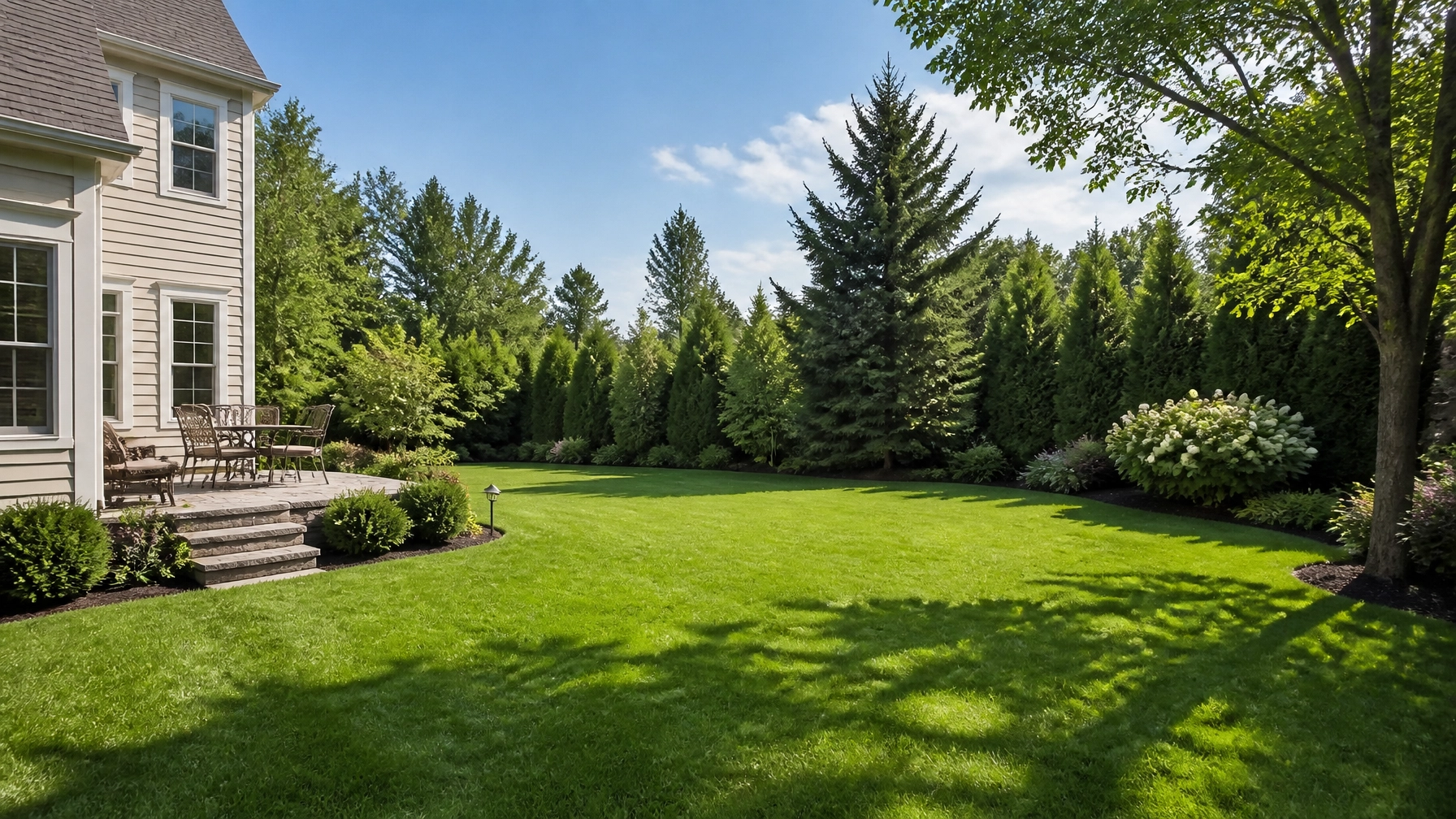
How do you get rid of dog poop smell in yard without hurting the grass?
If you want to know how to get rid of dog poop smell in yard without scorching the lawn, the short answer is layered: scoop daily, rinse the spot with plain water, neutralize the area with an enzyme-based pet-safe deodorizer, and improve drainage wherever waste tends to collect. Most homeowners in Albany, Saratoga, and the rest of the Capital Region instinctively reach for bleach or straight vinegar — both will yellow, dry out, or outright burn the same grass they are trying to clean.
The smell you notice on a humid August afternoon usually isn't fresh waste at all. It's residue: ammonia and sulfur compounds from urine and partially decomposed solids left in the thatch layer. Removing the visible pile is step one. Steps two through four are what actually clear the air.
Why does your yard still smell even after you scoop every day?
The odor that lingers after scooping comes from three places you can't see: liquid waste soaked into the soil, microscopic fecal residue stuck to grass blades, and bacteria multiplying in warm, damp thatch. A standard rake-and-bag pass collects the solid material, but the smell-makers stay behind.
Capital Region yards are especially prone to this because of how our weather cycles. A wet spring, a humid stretch in July, and sudden cool nights in September all create the perfect environment for bacterial blooms in shaded, poorly drained spots. Heavy clay soils — common in older Albany, Schenectady, and Troy neighborhoods — hold moisture longer and trap odor compounds closer to the surface.
A few specific culprits to check around your property:
- Mulch beds along the fence line. Soft material wicks up urine and holds it for weeks.
- Shaded corners. Without direct UV light, odor-producing bacteria reproduce faster and live longer.
- The same three to five favorite spots your dog returns to. Repeated use saturates the soil far beyond what daily scooping can touch.
- Low areas near gutters, downspouts, and AC condensate lines. Pooled water plus organic residue equals an odor amplifier.
If your nose tells you the smell is strongest along fences, in shaded corners, or near downspouts, that's not your imagination. That's where waste residue concentrates.
What products and habits actually neutralize the odor?
Forget the strong-scented sprays at the big-box store. They mask the smell for a few hours, then the bacteria come back stronger. What works is breaking down the source. Here is the stack to use, in order of effectiveness:
1. Enzymatic cleaners labeled for pet waste. Products like Simple Solution Yard Pro, Nature's Miracle Yard Odor Eliminator, and Skout's Honor Yard + Kennel use live enzymes or beneficial bacteria to digest the actual odor molecules. Apply on a damp lawn, follow label dilution, and avoid watering for the next 24 hours. Reapply every two to four weeks during warm months. 2. Plain water rinses. The cheapest tool you have. A 60-second hose pass over high-traffic spots right after each scoop dilutes urine and washes residue past the root zone, where soil microbes finish the job. 3. Garden lime, used carefully. A light dusting of agricultural lime (NOT quicklime, NOT hydrated lime) raises pH and neutralizes acidic urine compounds. Use sparingly — too much will burn grass and shift soil chemistry against the lawn over time. 4. Aeration in fall. Compacted, low-oxygen soil is where bad smells brew. Pulling cores in September or early October — standard timing here in zone 5b — lets oxygen, water, and beneficial microbes back into the root zone. Smelly hot-spots almost always shrink after a single aeration pass.
What to avoid entirely:
- Bleach. Kills grass on contact and is toxic to dogs through paw absorption.
- Pine-Sol, ammonia, and most household cleaners. Same story — burns turf and irritates pets.
- Heavy vinegar applications. A little is fine on hard surfaces; soaking lawn areas drops the pH far enough that grass yellows.
- "Stronger fragrance" sprays. They cover, they don't clean. The smell returns within hours.
A consistent yard sanitizing and deodorizing routine — whether you DIY or hand it off — handles what scooping alone can't reach. The same enzyme-based approach the DookieDocs Crew uses on Saratoga Springs yards works in any Capital Region backyard: noticeable improvement within two to three treatments, not one.
When should you treat the yard versus just keep scooping?
If you've scooped daily for two weeks, rinsed the hot spots, and the smell is still there, the problem has moved past surface treatment. That usually means waste residue has built up in thatch and soil over a longer stretch — or you have a drainage issue keeping the area perpetually damp. A deep, top-to-bottom clean followed by a regular weekly removal cadence resets the yard; after that, ongoing upkeep is enough to keep odor from coming back.
Humidity, dog count, and shade all push the schedule the other way too. A single small dog on a sunny, well-drained quarter-acre can often get by with bi-weekly attention. A multi-dog household on heavy clay, with a fenced shady run, needs twice-weekly scooping plus monthly deodorizing to stay neutral through July and August.
The bottom line on how to get rid of dog poop smell in yard: it isn't about a magic product, it's about the order of operations. Scoop first, rinse second, treat third, repeat consistently. Strong-smelling sprays are the slowest path to a yard that actually smells like a yard again.